
Title graphic reading “Game Roadmap Lessons from Civilization VII’s Live-Service Communication”

Game Roadmap Lessons from Civilization VII’s Live-Service Communication

A game roadmap is easy to publish. Making one useful is harder. A list of future features can create excitement, but it also creates promises that players will remember when plans change. A useful roadmap needs to answer a more practical question: why should players believe the game will be worth returning to? Firaxis and 2K have provided an interesting example with Sid Meier’s Civilization VII. During the franchise’s 35th-anniversary celebrations at PAX West, they announced a major free update called Arc of Tomorrow, the game’s first paid expansion, Earthrise, and the reopening of the Firaxis Feature Workshop for player testing. The timing matters. The announcements came after what Eurogamer described as a rocky launch. This was not only a product announcement. It was also an attempt to explain what Civilization VII is becoming and why players should keep paying attention.

A roadmap needs something players can reach soon

The most exciting part of a roadmap is often the furthest away. Arc of Tomorrow and Earthrise are planned for 2027, which gives players a sense of direction but does not give them much reason to return next week. The announcement also points to Update 1.5.0, planned for later in September 2026. That update includes the True Start Location: Earth map, new map types and changes to diplomacy, resources and the interface. That combination is helpful. Players get a longer-term plan and a nearer milestone they can understand. A studio does not need to reveal every detail of the next twelve months, but it should avoid making the future feel so distant that the roadmap stops mattering to the people playing today.

Explain free and paid content plainly

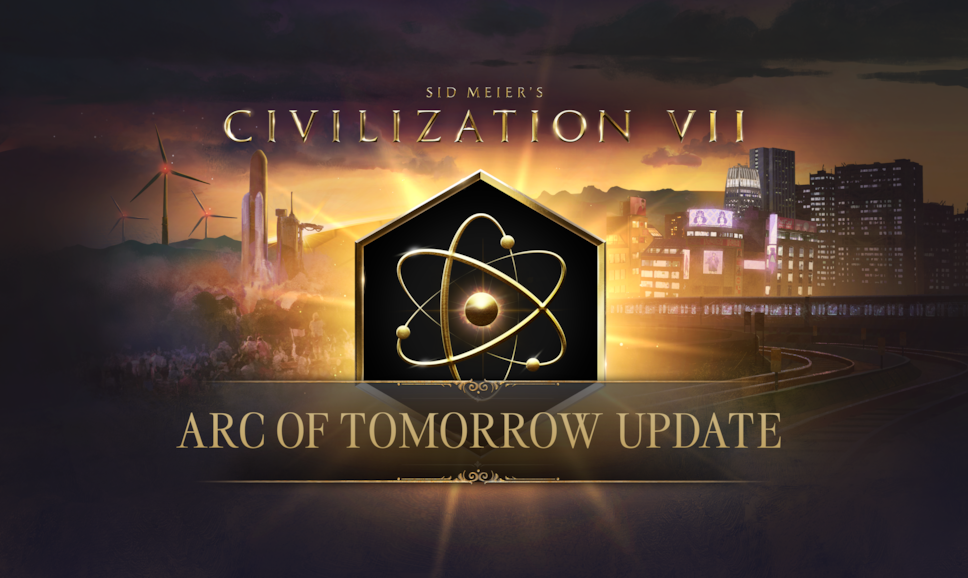
Arc of Tomorrow will add a fourth Age, the Atomic Age, and is described as a free update for Civilization VII owners. Earthrise is a separate paid expansion about space exploration and environmental adaptability across the campaign. Both are planned for 2027. The official 2K announcement makes that distinction clear. Players can see which part of the future is included with the game they already own and which part will require another purchase. Arc Of Tomorrow Update That will not prevent every complaint. Players may still ask whether a particular improvement belongs in a paid expansion. At least the information is clear enough for that conversation to happen honestly. For live service games, this matters. When every roadmap item looks like a sales opportunity, useful updates begin to feel like adverts. When paid content is hidden behind vague language, players assume the worst. Say what is free, say what is paid and explain what each part adds.


A feature list is not a plan

The Arc of Tomorrow announcement includes a new Age covering roughly the period from the 1950s into the near future. It also mentions period-specific gameplay, buildings, units, visuals, music, leaders and civilisations, as well as expanded nuclear gameplay and new diplomatic options. That is a lot of content. It does not, by itself, explain how the update will improve the experience. A useful game development roadmap connects features to player problems or desired experiences. Will the new Age make the end game more satisfying? Will the diplomacy systems create better strategic choices? Will the new map types answer a common request? The announcement starts to address those questions, but the follow-up communication will have to do more. This is where many roadmaps become lists rather than plans. They tell players what the team is building without explaining why it matters. A feature name is not a benefit. The benefit needs to be explained in language players recognise.

Give the community a defined role

Firaxis is reopening its Feature Workshop so selected players can test early content from the planned updates. The official developer preview presents the workshop as a way for the community to help shape what comes next. That gives players something more useful than another request to wait. Some of them receive a defined role in testing and feedback, while the studio gets a way to learn from people using the early systems. There are limits. A playtest is not a referendum, and selected testers will not represent every player. Early features can also change or disappear. The studio needs to explain that clearly, or testing can create another set of expectations that later becomes difficult to manage. When the boundaries are clear, playtesting gives the studio useful communication between major updates. It also gives players a way to contribute beyond posting a reaction after release.

Be honest about what is still uncertain

A future plan cannot repair every problem from the past. Announcing content for 2027 does not prove players will return, and it does not guarantee that the new systems will address the concerns around the launch. Long-range plans carry risks of their own. Delays, cancellations and changes are normal parts of development, but they become reputational problems when the original announcement sounded like a promise rather than a direction. The safest approach is to label certainty honestly. Separate content that is coming soon from content in active development, features being tested and ideas that may change. That may sound less exciting, but it gives the studio room to communicate like a development team instead of defending an old press release.

The hot take: a roadmap is a communications product

A good roadmap does more than list updates. It helps players understand why staying involved might be worthwhile. The Civilization VII announcement has a sensible structure: a nearer update, a major free addition, a separate paid expansion and a player-testing programme. Each part gives the audience a different way to understand what happens next. The approach will only work if the follow-up remains clear and the promised content arrives in a form that meets player expectations. The announcement is a starting point, not proof that the strategy has succeeded. For developers and publishers, the lesson is to build the roadmap for communication as well as development. Explain what is changing, why it matters, who receives it, what it costs and how players can help shape it. Then return to those points as the work progresses. A roadmap is not a promise to keep everyone happy. It is a way to make future value understandable.

Oh hi there 👋
It’s nice to meet you.

Sign-up to receive awesome video game marketing tips in your inbox.

I don’t spam! Read my privacy policy for more info.