
How to Prepare for Steam Next Fest
Preparing for Steam Next Fest can be seen as a significant milestone in an indie developer’s journey. I see it every single time a festival rolls around: developers scrambling at the last minute, stressed about demo builds, or wondering why the needle isn’t moving on their wishlist count.
I’m Dan Sheridan, a video game marketing consultant who has worked on dozens of games over the last few years – some massive hits, some quiet learners and the difference between the two always comes down to the preparation phase. I’m not here to be another “marketing guru”. In my view, most of those people are marketing commentators, not practitioners. They’re watching from the sidelines and repeating generic advice, or using hindsight with data points. I’m in the trenches every day working on live games.
This guide is based on direct experience. I offer my help for free because I want to see more games actually make it. You can book a 1:1 call with me for an hour to evaluate your readiness, no strings attached. If you need more support beyond that, we can work something out. I’m also building out a free video game marketing Skool community where I’ll be launching free courses and resources very soon. I’m not trying to sell you a $500 “masterclass”. I’m sharing with you what I’ve learned over the years through success, and failures to help you be better prepared for what is to come.
If you want to know how to prepare for Steam Next Fest without losing your mind, here are 10 tips from experience:
1. How to Prepare for Steam Next Fest – Go to the Source (and Filter the Noise)
The first thing you need to do is ignore the noise. There’s a lot of generic advice out there: “make a good game,” “have a demo,” “submit to festivals,” “reach content creators,” or “buy my course.” While these points are technically true, they’re “duh” level information. These commentators likely know more than the average person, but they aren’t giving you practical, tactical advice because they aren’t doing the work.
Steam as a platform provides incredible documentation and videos. They want you to succeed because they want a successful festival. Start with the official documentation first to understand the requirements and timeline. Watch the videos (save the playlist) + subscribe and click the bell for notifications, ask questions live. Read the Tips. They know their platform better than anyone, and that’s your foundation.
Use the official Steam resources to understand the “what,” and use practitioners like me to help you figure out the “how” for your specific situation.
2. Your Steam Page is a Living Document
Your Steam page isn’t something you “set and forget”. Every piece of copy on that page is SEO, but you need to write it for a human being first. I always tell devs to run “human tests”. Ask a friend to look at your page for 5-10 seconds and tell you what the game is about. If they can’t, your capsule art or short description has failed.
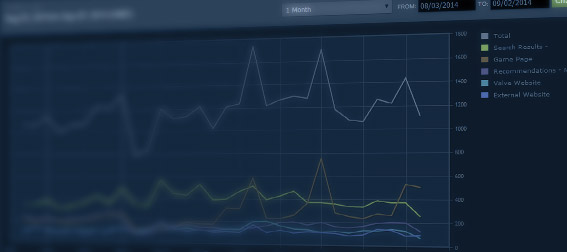
Check your marketing dashboard analytics to see where your traffic comes from. If people are landing on your page but not wishlisting, your content is likely the culprit. Ask yourself the hard questions: Could my trailer be better? Are my screenshots detailed enough? Does my description copy the hook the player? Are the tags correctly assigned? Is my feature list visual and easy to scan? Improve things step by step, make notes with each change in terms of before and after and watch your analytics to see if your changes have an impact. Don’t be afraid to A/B test capsule art or copy (you can run it for a week, and then swap). This isn’t a guessing game anymore; the data on the platform tells you what’s working, and the documentation tells you exactly what matters.
Pro Tip: It’s great to get feedback from other developers, but don’t fall into the trap of marketing only to other developers on Discord or Reddit. They might decide to give you a “pity wishlist” out of professional courtesy, but they are unlikely to actually buy the game. Market to players. Focus your energy on your actual audience.
3. The “Help Them Help You” Press Kit
You don’t need a fancy, paid press kit platform or even a free one – that’s just an ad for someone else’s services. A simple, publicly accessible Google Drive or Dropbox link is just as good. The key here is empathy for the person on the other side. Creators and journalists are busy. If your screenshots are named final_render_01.png, you’re making them work harder.
Organise your press kit into folders for artwork, logos, screenshots, trailers, and a fact sheet. Include game info,team info (notable credits are a plus), price ($ € £ are common), expected release date, and your social links. Name your files descriptively: GameName_BossFight_Landscape.png. Give them options: 16:9 for articles, 1:1 for Instagram, and 9:16 for TikTok. Your job is to help them do their job.
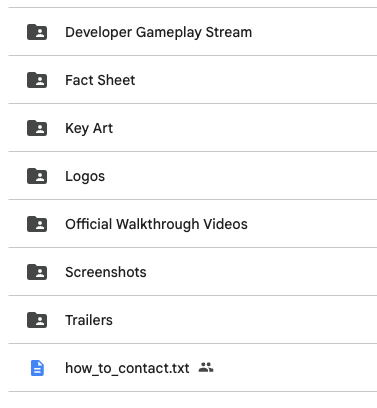
I even recommend including a simple .txt file with your direct email address. If a creator or journalist loves your game but needs a specific asset, reformat, you want them to be able to reach you instantly. The easier you make it for creators and press, the more likely they are to actually cover your game. Read my best practices for video game PR strategies.
4. Outreach is Focused, Not Spray and Pray
Steam will do some heavy lifting by showing your demo to press if you’re ready in time, but you can’t rely on that alone. You need to be proactive. But please, for the love of your reputation, don’t use mass mail merges. Target individuals who actually play your genre.
When you email a creator, include a lightweight GIF of the gameplay right in the body. Don’t make them click a link just to see what the game looks like. Keep the text short: what the game is, why it fits their channel, and a clear “ask”. Are you asking them to play the demo? Feature a trailer? Include it in an event wrap-up article? Be specific.
If you don’t hear back, follow up once after a few days. A polite second message is fine. If they don’t respond then, move on. Spamming is the fastest way to get blacklisted. Building relationships with gaming creators and journalists takes time, but it’s worth it. One thoughtful email to the right person beats a hundred generic blasts to the wrong ones. This is also the advantage of working with a consultant like me or a game PR agency. They already have the relationships, they will be aware (or should be!) of the media landscape – and will have the experience and knowledge to help get your game front of mind.
5. Playtest Until It Hurts
I’ve seen games with “skipped features” or “feedback links that don’t work” or “game-breaking bugs” make it into demos more times than I can count. Often it’s me discovering these things before the press previews. Because of NDAs, and respect for developers, I’m not going to name names, but it happens to the best of us. YOU need to break your demo before the public does.
Don’t just trust your family and friends; they want you to succeed and will likely overlook the jank or bugs you’ve become blind to. Use subreddits like https://www.reddit.com/r/playtesters/ or https://www.reddit.com/r/playmygame/, run a public playtest.
Alternatively, I can organise focus testing on a paid hourly basis from seasoned QA professionals. This feedback is your most valuable asset. It will tell you if you’re actually ready for this Steam Next Fest, or if you should hold off until the next one.
Prioritise the feedback you receive. If 5-10 people mention the same issue, that’s a signal. If one person doesn’t like your art style, that’s feedback but maybe not actionable. Use this to decide whether your demo is ready or whether you need more time. Often it’s better to withdraw and come back stronger than to waste your one shot.
6. Be the Face of Your Steam Community
During Steam Next Fest, you need to be “on”. Post an announcement on Steam detailing exactly what is in the demo, focus on features and not technical details or jargon. You can mention that you are collecting feedback as it’s super helpful to shape the game for release – but avoid using language that makes players feel like they are ‘testers’ for your game. You should have already prepared and tested the hell out of your demo. Then, and this is the part that most devs miss, actually answer the comments.
Don’t try to funnel everyone to Discord. If a player asks a question on the Steam forums, answer it there. An active developer presence feeds the Steam algorithm and shows potential players that the game is being actively maintained. You can go one step further and organise the forums to keep conversation in specific threads – Demo Feedback – How to report a bug etc. If you are planning on posting to social media during Steam next fest then look into scheduling tools like Buffer and plan social media posts in advance so you can spend your “live” time actually talking to your players.
Set aside time during the fest to do a deeper post. Share some info about a feature or something you’ve noticed from your community that surprised you. Tell them about the gameplay, the features, or the roadmap. Players don’t want the nitty gritty of how you made the game; they want to know what’s coming and why it matters to their experience. Then at the end of next fest, do a “thanks for playing” or celebratory post. Keep that positive energy going – feeding the algorithm.
7. The Rule of 7 and Content Repurposing
There’s an old marketing adage called “The Rule of 7”: a person needs to interact with a brand seven times before they make a decision. I apply this to every Steam post. If you write one “Developer Update” or better still “Community Update” on Steam, that is the “Pillar” for seven other pieces of content.
Take that one post and turn it into:
- A Reddit thread
- A BlueSky update
- A Threads post
- A TikTok
- An Instagram Reel
- A YouTube Short
- An email to your mailing list

You don’t need high production values for this. “Raw and scrappy” often performs better on TikTok than a highly polished trailer. Use a simple spreadsheet to track this. One Steam post equals seven more chances to be seen.
The algorithmic socials can give you a chance to reach people who don’t follow you yet. Don’t worry if your first post doesn’t click. Look at the data and work out “why”. Don’t worry about the presentation – if it shows the gameplay, it will work. For the micro-video platforms you don’t need to create different content – one 9:16 video can equally work for TikTok, Reels, Shorts – but ensure you use each app to upload from (seems to be more favourable, then doing it via a scheduler using an API), this doesn’t appear to matter for the usual suspects like BlueSky, X or Threads.
Pro Tip: Captions created on TikTok are also searchable, vs. burned in captions.
Build your email list beforehand too. If you don’t have one, create one now. Lots of free services available. Then repurpose that one Steam post into those seven pieces of content and suddenly you’ve reached far more people than you thought possible. You can apply this thinking not just to Steam posts – but always consider how you can take advantage of pillar content with the Rule of 7.
8. Track YOUR Benchmarks, Not Theirs
Stop looking at the front page of Steam Next Fest and wondering why you don’t have 50,000 wishlists. That path leads to burnout. You need to set your own KPIs (key performance indicators). Look at your current daily impressions and wishlists, then set a realistic goal: “I want to 2x my daily wishlists during the fest” or “I want to 4x my demo downloads”.
Write down your baseline before the fest starts. How many impressions do you get on your Steam page currently? How many views? How many wishlists per day? How many followers do you have on Steam and social media? How many people are on your mailing list? How many people typically visit your website and where do they come from? How many demo downloads do you get, and how long do people typically spending playing your demo?
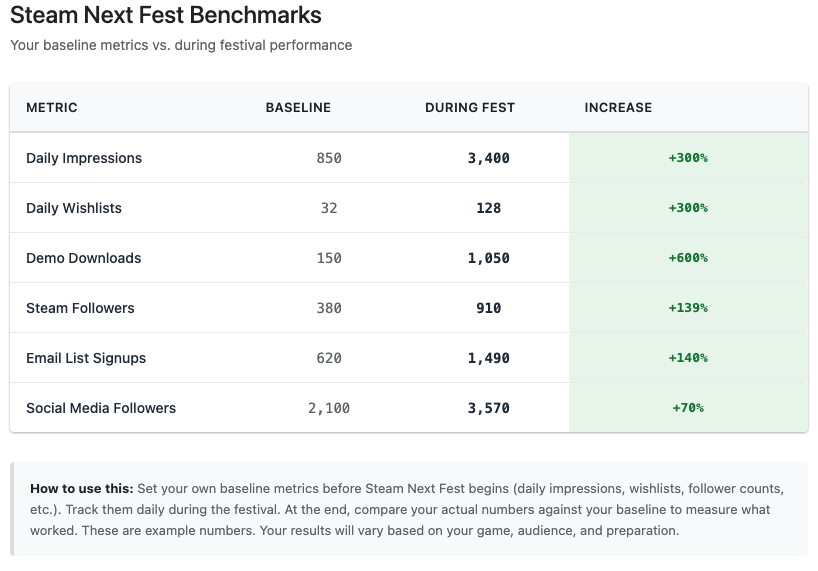
Once you have all these numbers, they become YOUR benchmark. During the fest, track these daily. See which content repurposing worked best. Which social platform drove the most clicks? Which creators actually covered your game? At the end, see how you did against your own baseline. What can you improve? What should you do more of? What should you stop doing?
Try not to compare your results against others. That’s when self-doubt creeps in and people quit. You can’t control other people’s results. You can only learn from your own. This is why generic advice doesn’t help. Your game, your audience, your situation is unique. Your benchmarks matter more than anyone else’s numbers.
9. The Power of “Not Yet”
If you’re two weeks out and the demo feels like a chore to play, or the bugs are piling up, don’t panic. The best move might be to withdraw and wait for the next Steam Next Fest. You only get one shot per App ID. This is critical. More time equals more opportunities for awareness and conversion. It’s much better to wait six months and come out swinging with a polished product than to faceplant now.
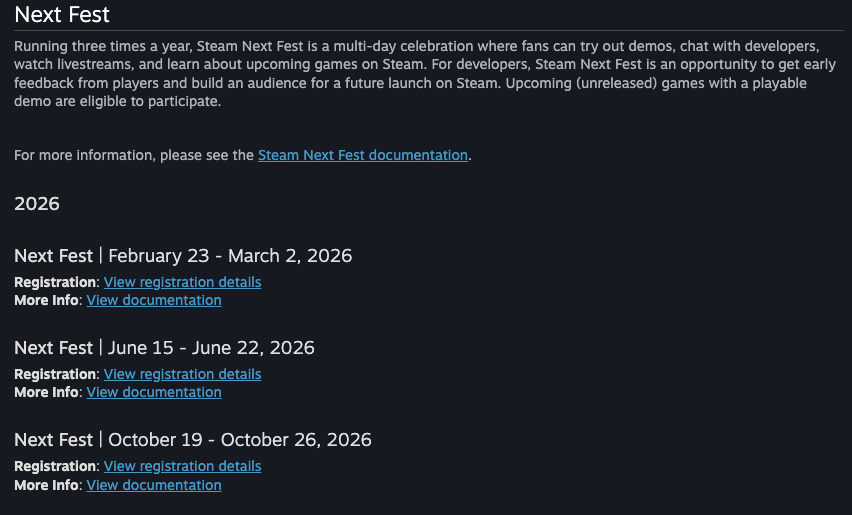
You can withdraw at any time, but it’s significantly better to do it before you reach creators/press or the Press Preview starts, usually 11 days or so before the event. This avoids visibility issues on the platform and ensures you don’t confuse journalists who might be looking for your game. Make the right call now. You have a few months to get everything in order before the next one.
10. Keep Your Perspective
Finally, don’t stress. Steam Next Fest can seem like a massive opportunity (as everyone talks about it in the week’s pre-festival), but it isn’t the end of the world if it doesn’t go perfectly. Use it as a learning experience. What worked? What didn’t? If the data shows people aren’t clicking through to your game, look at the reasons why. If they’re quitting the demo after two minutes, perhaps there is an issue with the tutorial. Don’t ever be in a hurry to release a demo or a game that isn’t ready. The “trenches” is often a long term play, not a quick sprint.
Success, failure, and everything in between all teach you something valuable. It’s not about being perfect on day one. It’s about using the information you gather to inform and revise your plans. Nothing is set in stone. The games industry rewards resilience and iteration, not perfection. Keep building, keep learning, and keep moving forward.
How do I know if I’m ready for Next Fest?
If your core gameplay loop is solid, your Steam page is fully optimised with Trailers, Screenshots, Tags, GIFs, and you have a bug-free 20-30 minute demo, you’re ready. Ask yourself: Would I be comfortable sending this to creators or the press right now? If the answer is no, you’re not ready yet. If you’re still fixing things a week before, wait for the next one.
What is the “Rule of 7”?
It’s the idea that a player needs to see your game multiple times across different platforms before they finally hit that “Wishlist” button. Repurposing one piece of content into seven posts across different platforms is the easiest way to hit this number without burning out trying to create entirely new content.
Should I use Discord or Steam Forums?
Both are useful, but prioritise Steam. You want the activity to be visible on Steam to help your organic reach. Discord is great for community building, but during the fest, keep the conversation where the algorithm can see it. Respond on Steam first, always.
How long should my demo be?
Typically depending on the length of your game you want to aim for 20 to 30 minutes. If you have a shorter game length, then you need to be tactical using visuals. Ideally you want to showcase the core mechanics and leave the player wanting the full game, not give them the whole experience for free. If people are spending more time playing your demo than they will on the full game, your demo is too long. It should be just enough to give them a taste of the core gameplay.
How long before should I start preparing?
If you haven’t started, and you’re reading this blog post at the end of January then start now. Ideally, you would have started preparing by the time you submitted your game for the fest. Even 3-4 weeks of focused preparation is better than last-minute scrambling, though it can be tighter.
What should be my goals for Steam Next Fest?
Your goals should be measurable and specific to your current situation, not based on what other games are doing or what gurus tell you. Set realistic targets based on your own baseline. Maybe you want to increase daily wishlists by 50%, reach 3x your current monthly impressions, or get 5 content creators to cover your demo. Focus on: did my preparation work? Did more people see my game? Did they engage with it? Use those answers to improve future marketing efforts.
Should I collect feedback during Steam Next Fest?
Absolutely. Set up your Steam community forum for this purpose and monitor it daily. Ask for specific feedback: What worked? What confused you? What would make you wishlist this? Read it, don’t argue with it, and take notes. Some feedback is invaluable; some is noise. That’s fine. Look for the signals and implement the feedback – this can also give you content ideas for a future Steam post e.g. “We took onboard XX feedback from Steam Next Fest, and implemented it into the game – this is how we are improving the experience based on your feedback”. You can also set-up in-game feedback forms or links to Google Forms, just make it simple – don’t feature it more than once, but make it accessible.
Should I do a livestream?
Only if you’re comfortable doing it and have an audience to watch. You can also pre-record and stream via various tools. One of the services I provide is to help devs to stream their game and take the burden off and help reduce costs. If you feel like streaming is forced marketing – then the documentation from Next Fest says that streaming is now optional so you don’t feel like you need to do it. Instead, I would still focus on the “Rule of 7” content repurposing strategy. If you did prepare an hour stream, perhaps there are content moments that could be clipped and shared. If you have an engaged community that wants to see you play and chat, a casual Q&A can build connections – you ultimately need to make that call based on what fits your audience and bandwidth.
Should I engage with the community before, during, and after?
Yes, but prioritise focus over presence everywhere. Beforehand, post on Steam that you’re participating. There are a few resources that can help in the official documentation. During the event, be active, answer questions, acknowledge feedback, and thank people for playing. You don’t need to be on every platform, pick a couple where you can focus on. Consistency matters more than sporadic posts everywhere – and always prioritise Steam forums over others like Discord.
I followed all the advice, and Steam Next Fest wasn’t a success – what did I do wrong?
First, define “unsuccessful”. I’ve seen plenty of games that didn’t hit massive wishlist numbers but still learned invaluable things about their audience. That’s not failure; that’s data.
Did people download your demo but not play it? That’s a positioning issue, not a demo issue Your Steam page didn’t set the right expectations. Did they play it but not wishlist it? That happens. Not everyone who plays will wishlist, and that’s completely fine. Some won’t like your demo, and that’s okay. You can’t win over everyone.
Did you reach creators and press but they didn’t reply or passed? That could be a fit issue. Maybe your game doesn’t align with their usual content, or the timing was off. That’s not a failure on your part.
Here’s what I do after every Next Fest: I look at the data, identify what actually happened (not what I thought would happen), and adjust. If engagement is low, I optimise the Steam page. If creators or media pass, I re-evaluate positioning or reach out to different outlets next time. If the demo had low retention, I work with the team to iterate on the gameplay, pacing and tutorial.
The games I’ve worked on that didn’t win often still sold well after launch because we learned from the data. Marketing doesn’t stop after one festival. It continues, and each time you get better. The difference between a game that gains traction and one that stalls isn’t always the first event. It’s how you use the feedback to revise your plans for the next opportunity.
Do you feel prepared for Steam Next Fest?
If you want a real-world perspective on your readiness, I offer a free 1-hour consultation call where we can evaluate your specific situation. No sales pitch, no strings attached. Book a slot if that feels helpful.
For those who’ve made it this far, here’s a bonus: I’m offering an additional hour of strategy consultation to anyone who reads this full post. Use it to talk through your preparation, audit your outreach plan, or troubleshoot whatever’s keeping you up at night. Just mention “Blog Post” when you reach out.
I’m also building out a video game marketing community on Skool where I’ll be sharing courses, resources, and ongoing support.
No $500 masterclasses, no upsells – just practical knowledge from someone doing the work every day. Bear with me though; I’m working full-time in the trenches, so it’ll be slow to start, but it’s coming. My goal is simple: I want to see more games actually make it. That starts with better preparation. Are you ready?